
Engineering Guide
Wire EDM Explained: Precision Metal Parts for Prototypes & Short Runs
Some prototype parts can't be plastic. When a design calls for a precise metal component, especially one with sharp internal corners, thin features or hard material, conventional machining can hit its limits.
That's where wire EDM comes in.
At Titan Manufacturing, wire EDM is part of how we help customers move from idea to proven part, and then into production.
What Is Wire EDM?
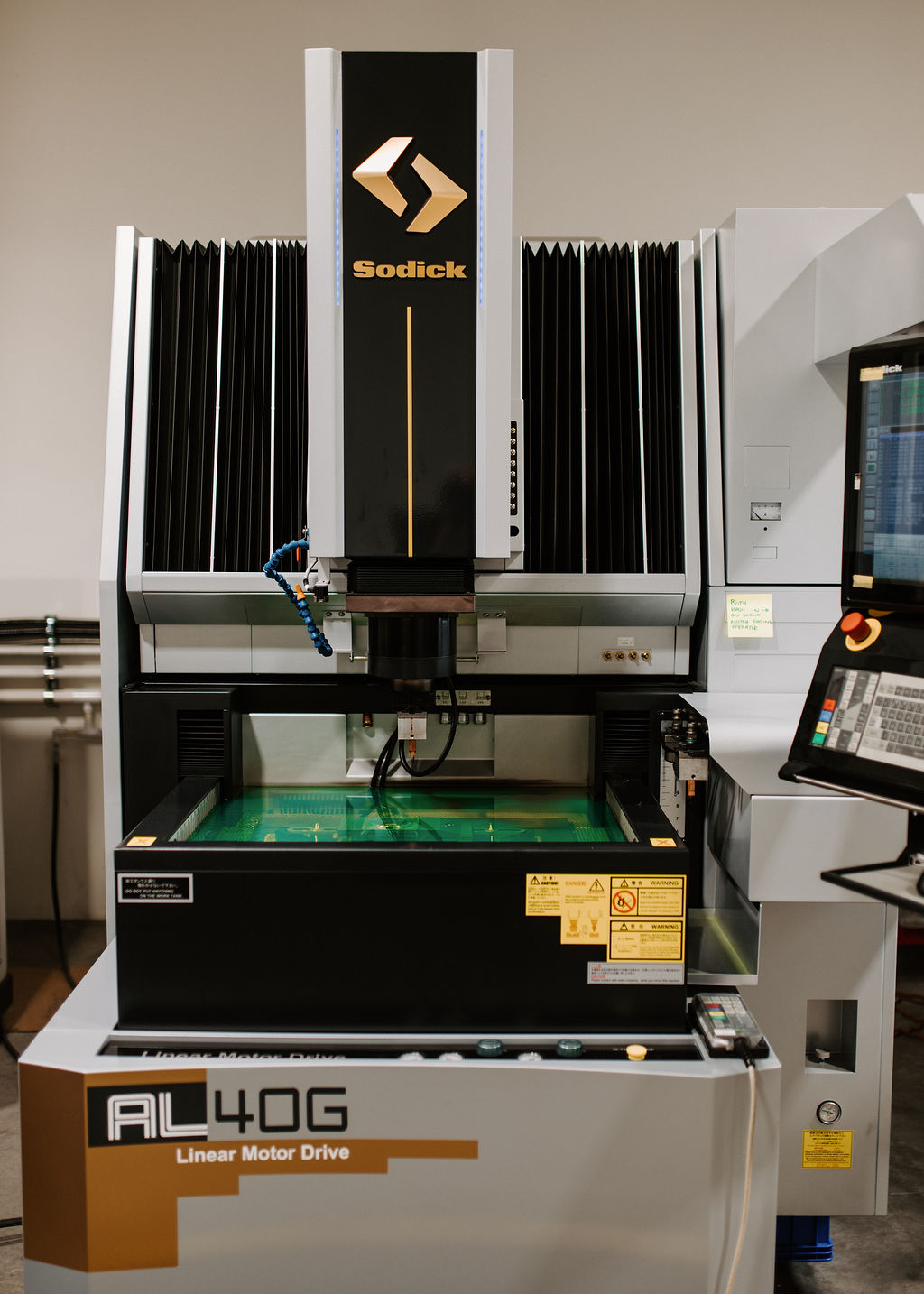
Wire EDM (electrical discharge machining) cuts metal using controlled electrical sparks rather than a spinning cutter.
A thin wire, charged with electricity, travels through the workpiece. Thousands of tiny sparks erode the metal along a programmed path. The wire never physically touches the part, so there's no cutting force pushing on delicate features.
The result is a precise, clean profile cut through the full thickness of the material.
Why Engineers Choose Wire EDM
Precision Without Cutting Force
Because the wire doesn't press against the part, thin walls and fine features don't deflect during cutting. That makes wire EDM well suited to delicate geometry that might chatter or bend under a conventional tool.
Sharp Internal Corners
A milling cutter is round, so it always leaves a radius in internal corners. A fine EDM wire can produce much tighter internal corners, which matters for parts that must mate precisely.
Hard Materials Are Not a Problem
EDM removes material electrically, so hardness matters far less than it does for conventional cutting. Hardened steels and tough alloys can be cut after heat treatment, which avoids the distortion that heat treating a finished part can cause.
Complex Profiles
Intricate 2D shapes, fine slots and detailed outlines can be programmed and cut accurately, often in a single setup.
Where Wire EDM Fits in Prototyping
At Titan, wire EDM is focused on helping customers confirm designs and test before they scale.
Common uses include:
- Metal prototype parts for fit checks and functional testing
- Short runs for field testing or validation, without investing in production tooling
- Precision components that pair with molded plastic parts in an assembly
- Design iterations where a profile needs to be tested, adjusted and cut again
Because wire EDM works directly from CAD with no dedicated tooling, it's a practical way to get accurate metal parts in hand early.
What Wire EDM Is Not Ideal For
Like any process, wire EDM has trade-offs:
- It cuts through-profiles, so it isn't the right choice for every 3D shape
- The material must be electrically conductive
- For high-volume production parts, other processes usually offer a lower cost per part
Knowing these limits up front helps you choose the right process for each stage of your project.
From Prototype to Production
Proving a design is only the first step. The real goal is a part you can produce reliably at scale.
Titan builds production molds and molds parts in-house. When a prototype or short run proves out, we can recommend the most efficient path to volume, whether that's injection molding, a hybrid approach, or continued short runs.
You keep one engineering team from first cut to final production.
Designing for Wire EDM: Quick Tips
- Share a clean CAD file with clear profiles and critical dimensions called out
- Identify which features are critical to fit or function
- Let us know the material and whether it will be heat treated
- Tell us the quantity you need and what you plan to test
Have a Part That Needs to Be Right the First Time?
Send us your CAD and tell us what you need to prove. Our team will recommend the right process to get you there.